
5 Ways to Style Your Festive Table
Five practical decisions — welcome nibbles, one lead platter, height, a grazing layout and an after-meal mukhwas moment — that hold a festive table together.
The Table Story · · 4 min read
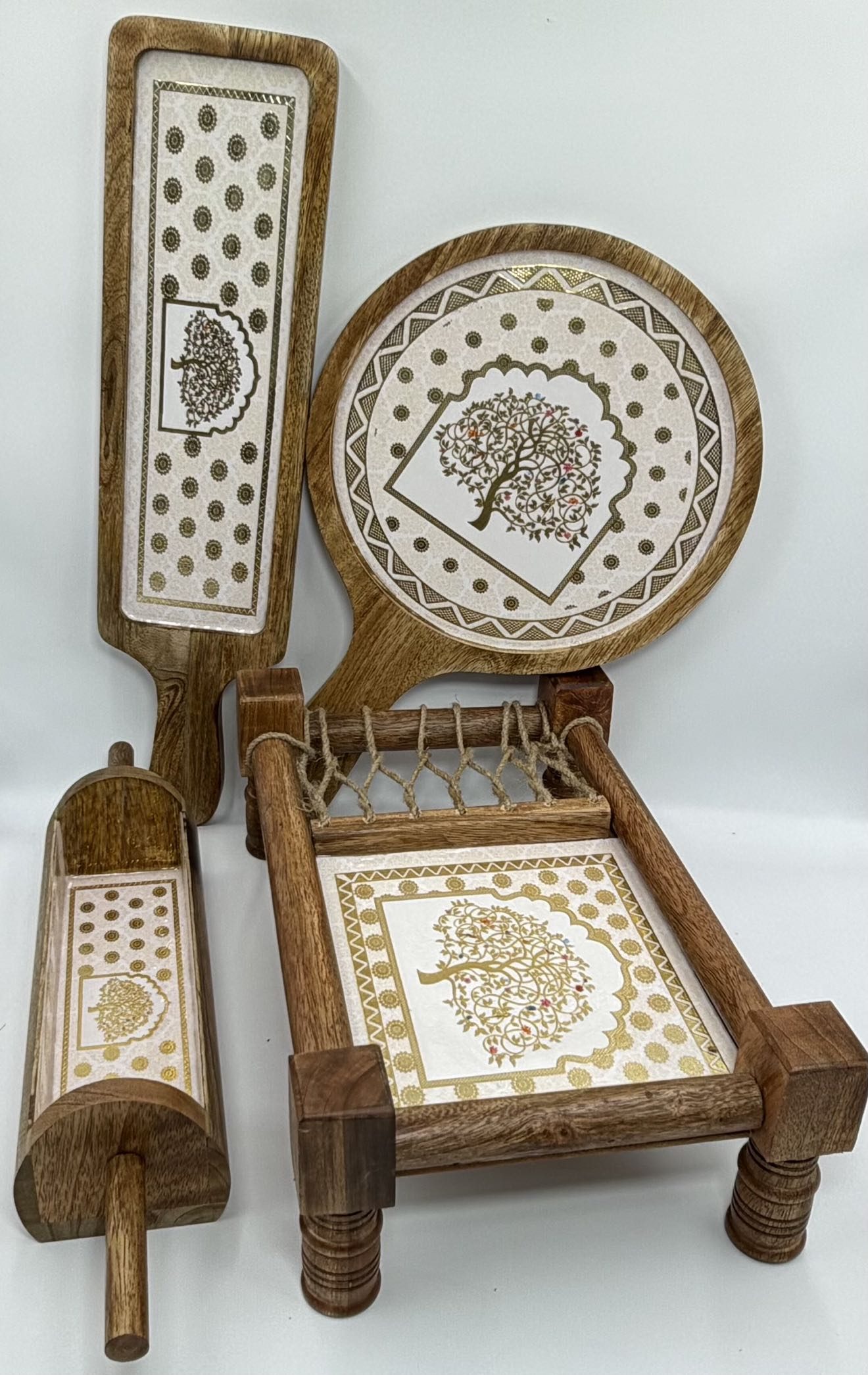
Festive hosting in most Indian homes rarely follows a schedule. Guests arrive earlier than promised, the kitchen is still busy, and someone is always looking for a place to set down a cup. A table that has been thought through in advance quietly absorbs all of it — people know where to stand, what to reach for, and that they were expected.
You don't need a new dinner service or a styling budget for that. Five decisions, made before anyone rings the bell, will carry an entire evening.
1. Start with Welcome Snacks & Nibbles
The first ten minutes set the tone. Before the main food comes out, keep a small spread ready near where people gather — roasted nuts, chivda, dry fruit, a few khakhras, whatever your house is known for. Guests who can help themselves relax faster than guests who are waiting to be served.
Keep it to two or three small pieces rather than one large one, and place them slightly apart so two people can reach at the same time without a queue forming. A pair of small trays works better here than a single big platter, because you can move them — to the console, to the balcony, to wherever the conversation has drifted.
If you're setting up for a larger evening, browse the full range of everyday pieces first:
2. Let One Serving Platter Take Centre Stage
The most common festive table mistake is treating every dish as equally important. Everything is large, everything is central, and the eye has nowhere to rest. Choose one piece to lead instead — a platter with real presence — and let the rest of the table support it.
Place it slightly off-centre rather than dead middle. Off-centre reads as composed; dead centre reads as staged. Then keep a hand's width of clear table around it. That empty space is what makes the platter look considered rather than crowded.
For sweets, farsan and mains served together, sectioned platters keep flavours apart while still reading as one arrangement.
3. Create Height with Trays & Dessert Stands
A table where everything sits at the same level looks flat, no matter how good the food is. Height is the cheapest correction there is. One raised piece among flat ones immediately gives the arrangement a shape.
The practical version: put mithai, laddoos or bite-sized desserts on a stand, and keep savouries and plates flat around it. You gain surface area too, which matters when the table is small and the guest list isn't.
If you'd rather build height gradually, a stacked pair of trays under a stand works, or use a single-tier stand for a lower lift.
4. Build a Grazing-Style Spread
Grazing tables suit Indian festive food better than most people expect. Our snacks are already meant to be picked at over an hour or two, and a spread lets guests eat in their own time instead of sitting down all at once.
The layout is what keeps it from looking like a buffet. A few rules that hold up:
- Work in diagonal lines across the table, not neat rows — the eye travels further.
- Group by texture: crisp things together, soft sweets together, fruit and salad together.
- Give every dip its own bowl and its own spoon, and keep it next to what it belongs to.
- Leave two clear landing spots for glasses and used plates. Guests will use them.
- Repeat one shape or one design across the table so the spread reads as a set.
Bowls do most of the work here — salads, raita, fruit, dry snacks — and repeating the same design across several pieces is what makes a mixed spread look intentional.
5. End with an After-Meal Mukhwas Moment
The last few minutes of a meal are part of the hosting, and they're usually the part nobody plans. People finish eating, the plates go in, and the evening loses its thread. A small mukhwas round brings everyone back to the table for a few more minutes of conversation.
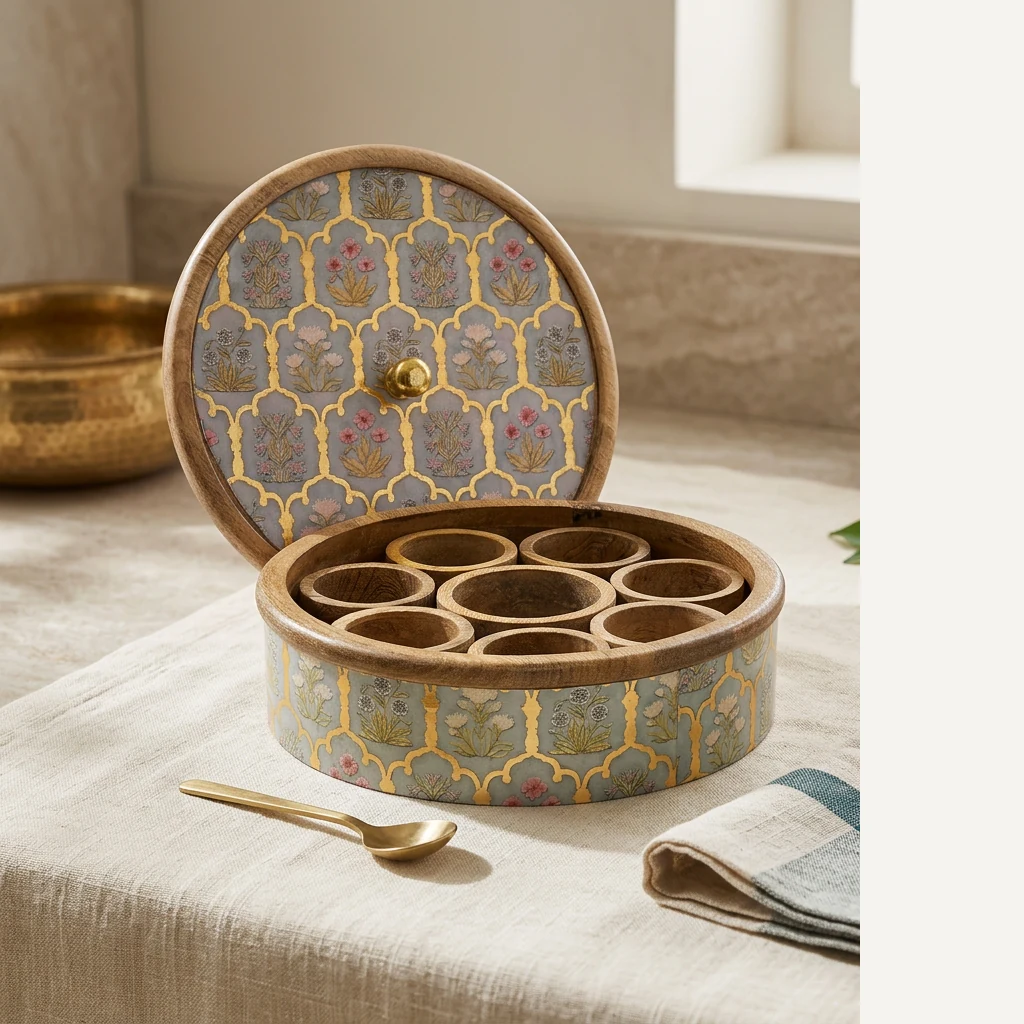
Our Masala Box, with its separate compartments, works well for this. It's made for a spice-box format, but plenty of hosts use it the other way round — saunf in one section, mishri in another, dhaniya dal, supari, whatever your family finishes a meal with. Bring it out on the table rather than passing it around the kitchen; it looks like part of the evening instead of an afterthought.
Good Hosting Is in the Details
None of this needs a full table reset. One platter that leads, one raised piece, a repeated design, and something small to close the meal — that is the whole method. Restraint is what separates a table that looks composed from one that looks full.
Everything above is hand-finished in solid wood and made in our own workshop. You're welcome to see the range in person before a festive season — our store is in Crawford Market, and it's the easiest way to judge scale and finish.