
How to Use a Masala Box as a Mukhwas Box
A compartmented masala box makes an elegant after-meal mukhwas server. What to fill it with, how to arrange it, and when to bring it to the table.
The Table Story · · 4 min read
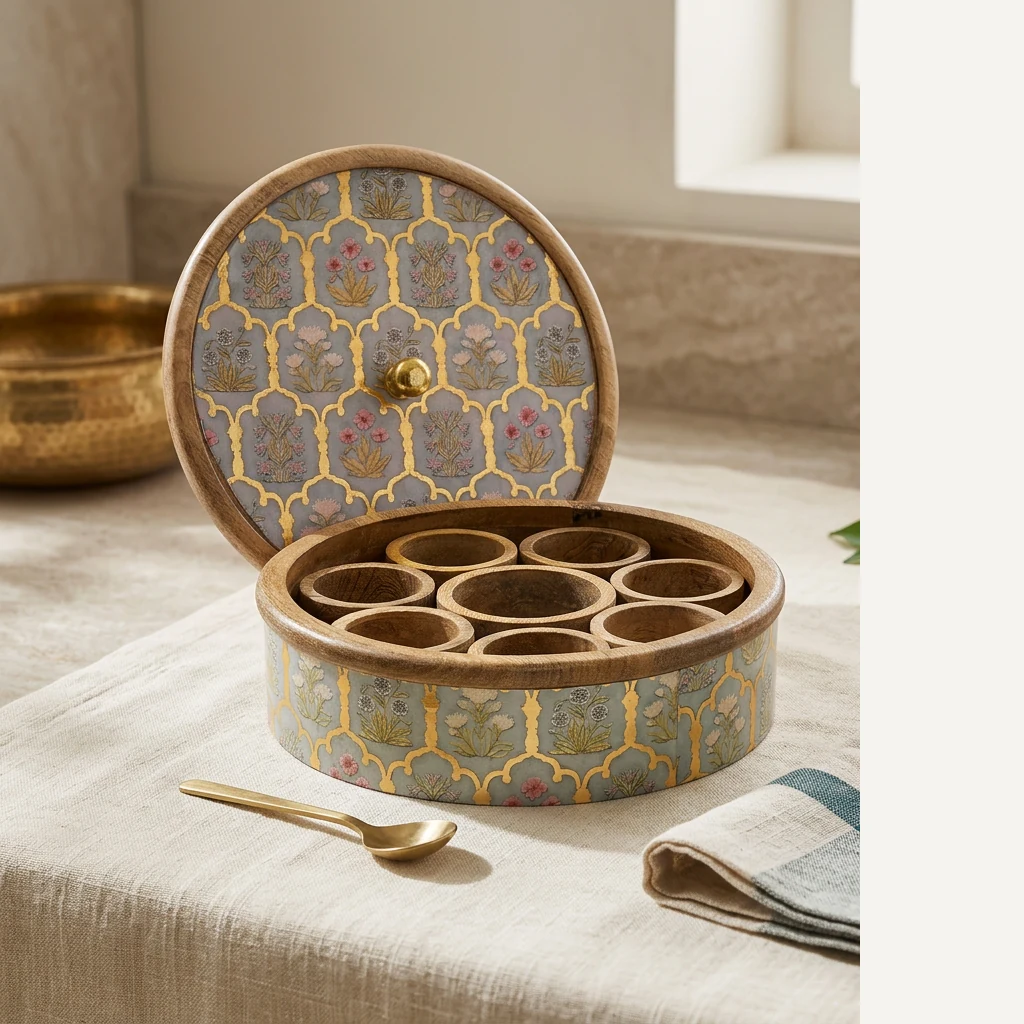
There is a moment at the end of a good Indian meal that nobody plans for and everybody remembers. Plates are pushed back an inch, the conversation slows, and someone reaches for something small and fragrant to finish on. Mukhwas is rarely the part of the meal anyone photographs, yet it is often the last thing a guest tastes before they leave your home. That makes it worth a little thought.
You do not need a new ritual for this. You only need somewhere better than a steel dabba to put it. A compartmented masala box, brought out after the plates are cleared, turns a handful of fennel into a small, deliberate close to the evening.
Why a Masala Box Works Beautifully for Mukhwas
A masala box is built around one simple idea: several small things, kept apart, reachable at once. That structure was made for spices, but it suits mukhwas just as naturally. Instead of offering one mix and hoping everyone likes it, you can set down three or four varieties side by side and let people choose.
Choice is the whole appeal. Someone will want plain saunf. Someone else will go straight for the sugar-coated version. A guest who has eaten a heavy meal will take a pinch of cardamom and nothing else. One box handles all of it without a cluttered tray of little katoris travelling around the table.
We do not sell the Masala Box as a mukhwas box — it is a spice box, made the way spice boxes have always been made. But the form is generous enough to carry a second life, and this is one of the nicest ones we have seen in customers' homes.
What to Put in Your Mukhwas Box
Keep it to things that stay dry and hold their texture for a few hours on the table. A workable set:
- Plain fennel — the baseline every table needs
- Sugar-coated sweet fennel, for anyone who wants the sweeter finish
- Green cardamom pods, whole
- Sesame or melon seed mixes, lightly roasted
- A shop-bought mouth-freshening mix, if your household has a favourite
- Mishri or small rock sugar, in the smallest compartment
Skip anything with moisture — dates, chutneys, anything sticky. They will bleed into the neighbouring compartments and the box stops looking considered within twenty minutes.
How to Arrange the Compartments
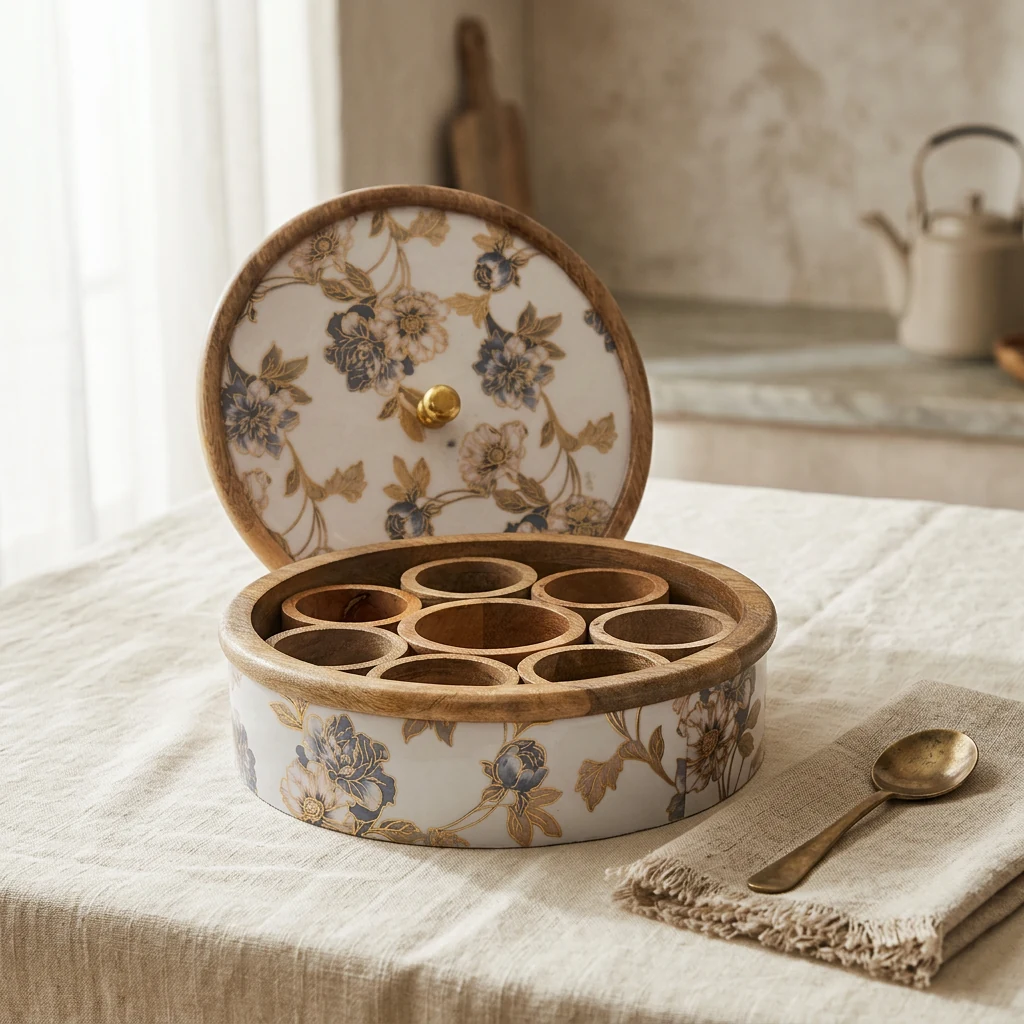
Arrangement is where this either looks thought through or looks like a snack drawer. A few rules that work every time.
Alternate colours rather than grouping them. Pale fennel next to dark seeds next to white mishri reads as intentional; three shades of beige in a row does not. Keep similar textures apart for the same reason — two coarse mixes side by side lose their individual character.
Fill each compartment about two-thirds. An overfilled box spills the moment it is passed, and a full compartment hides the shape of the box itself. Smaller quantities also mean you can refill mid-evening, which always looks better than a picked-over box sitting out for an hour.
Finally, wipe the rim before it goes to the table. It takes five seconds and it is the difference between a serving piece and a storage container.
When to Bring It to the Table
Not during the meal. The main course already has enough on it — platters, bowls, breads arriving in batches. Adding a mukhwas box to that is noise.
Bring it out once the serving dishes have gone back to the kitchen and the table has been wiped down. That small pause, where the table is nearly empty and one beautiful object is set down in the middle of it, is what gives the moment its weight. If you are serving chai or coffee, the box can come out alongside it on the same tray.
Everyday Trays — A small tray to carry the box, chai and teaspoons out together in one trip.
Make It Part of the Hosting Experience
Good hosting is mostly a series of small decisions guests never consciously notice. The right serving piece for the right course. Not having to get up four times. A table that changes shape as the meal moves through it.
A mukhwas box belongs to that same category of detail. Nobody will comment on it directly, but the evening ends on a considered note rather than trailing off. It is the same instinct behind building a table around a few anchor pieces — an idea we go into properly in our guide to creating an Indian grazing table, and again when styling a festive table.
How to Create an Indian Grazing Table
5 Ways to Style Your Festive Table
One Piece, More Than One Use
The pieces that earn their place in a home are rarely the single-purpose ones. A tray is a serving surface on one evening and a bedside catch-all on another. A bowl platter holds chutneys at lunch and dry fruit through the festive week. The masala box holds spices in the kitchen and mukhwas at the table — the compartments do not care what goes in them.
That flexibility is worth thinking about when you buy. Choose pieces with a shape that can be read more than one way, and your table stays interesting without needing more things in it.
Table Essentials — Where the Masala Box lives, alongside the smaller pieces that hold a table together.
The Edit — Curated sets, if you would rather start with pieces chosen to work together.
Come and See It in Person
Hand-painted wood is difficult to judge on a screen — the depth of the colour and the weight of the piece only really register in the hand. If you are in the city, our Crawford Market store has the Masala Box and the rest of our table essentials out on display.