
Where to Buy Tableware in Crawford Market
A practical guide to shopping for tableware and serveware in Crawford Market, Mumbai: what to look for, which categories matter, and why seeing pieces in person helps.
The Table Story · · 5 min read
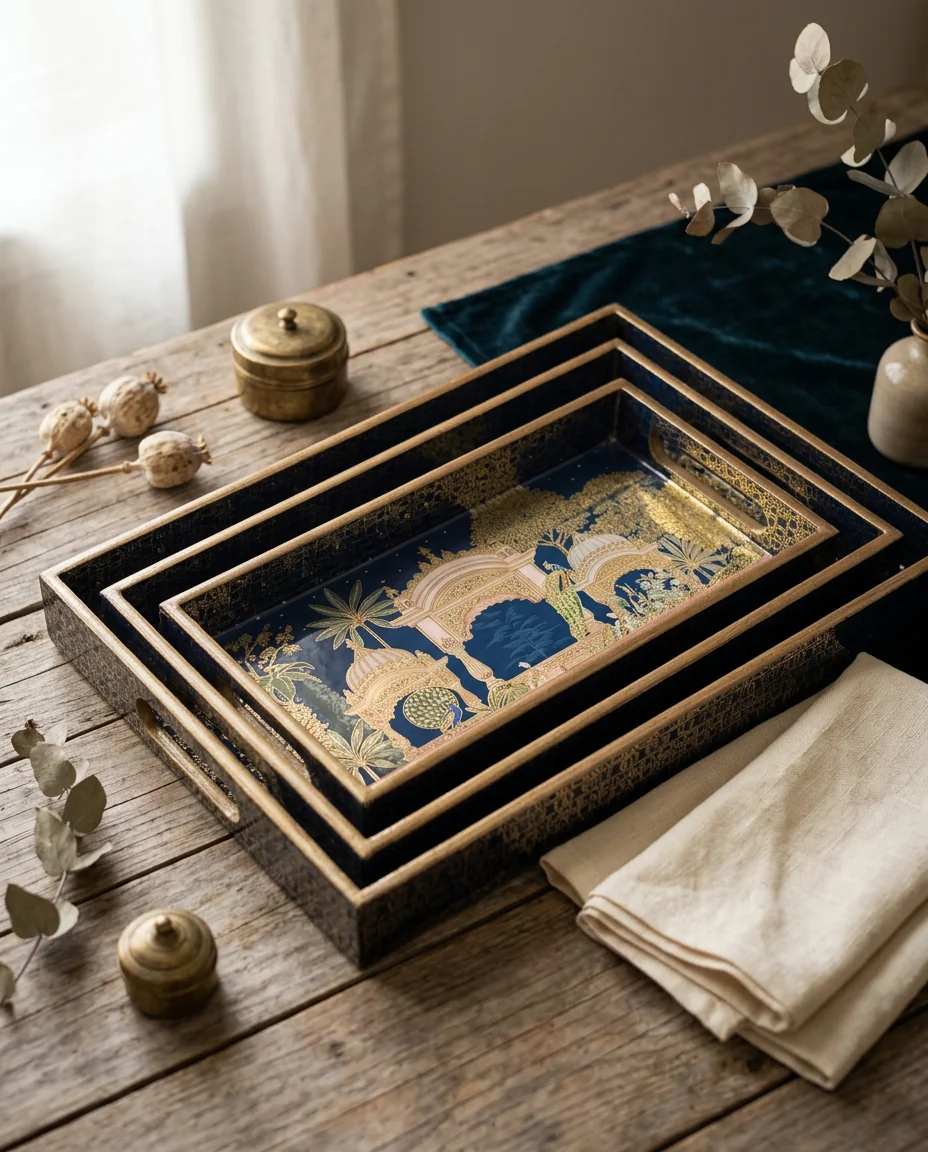
Crawford Market has been a shopping destination for well over a century, and its appeal has always been the same: a dense cluster of streets where you can compare a lot of things in one afternoon. The produce halls get the photographs, but the lanes running off them — Abdul Rehman Street among them — are where Mumbai has long gone for household goods, kitchen and dining pieces, gifting and home décor.
If you are planning a trip specifically for tableware, a little preparation helps. The area rewards people who arrive knowing roughly what they want, what size they need and how much they are willing to carry home. This guide covers how to shop for tableware and serveware here, what categories to look at, and how to choose pieces that will actually get used.
What to Look for When Shopping for Tableware
Start with material, because everything else follows from it. Wood, ceramic, steel and glass all behave differently on a table and in a cupboard. We work only in solid wood, so what follows leans on what we know: hand-finished wood is warm to look at, light enough to pass around, and forgiving of the knocks that come with regular use. It also needs to be wiped rather than soaked, and kept away from long spells in water.
Then size. This is the single most common thing people get wrong when buying online, and the main reason a shop visit is worth it. Measure the table you actually use — not the dining table you imagine hosting on — and think about the widest thing you serve. A platter that dominates the centre leaves nowhere for plates.
After that, ask what the piece is for. Everyday pieces get used four times a week and should be easy to lift, wipe and put away. Entertaining pieces come out a few times a year and can afford to be larger and more decorative. Most homes need more of the first than the second, though it is usually bought the other way round.
Finally, look at how pieces sit together. A table reads best when there is a thread running through it — a shared colour, a repeated motif, a similar finish. Buying two or three pieces in the same design does more for a table than six unrelated ones.
What Types of Tableware and Serveware Can You Shop For
Tableware is a broad word. It helps to think in categories, because that is how you will end up using them.
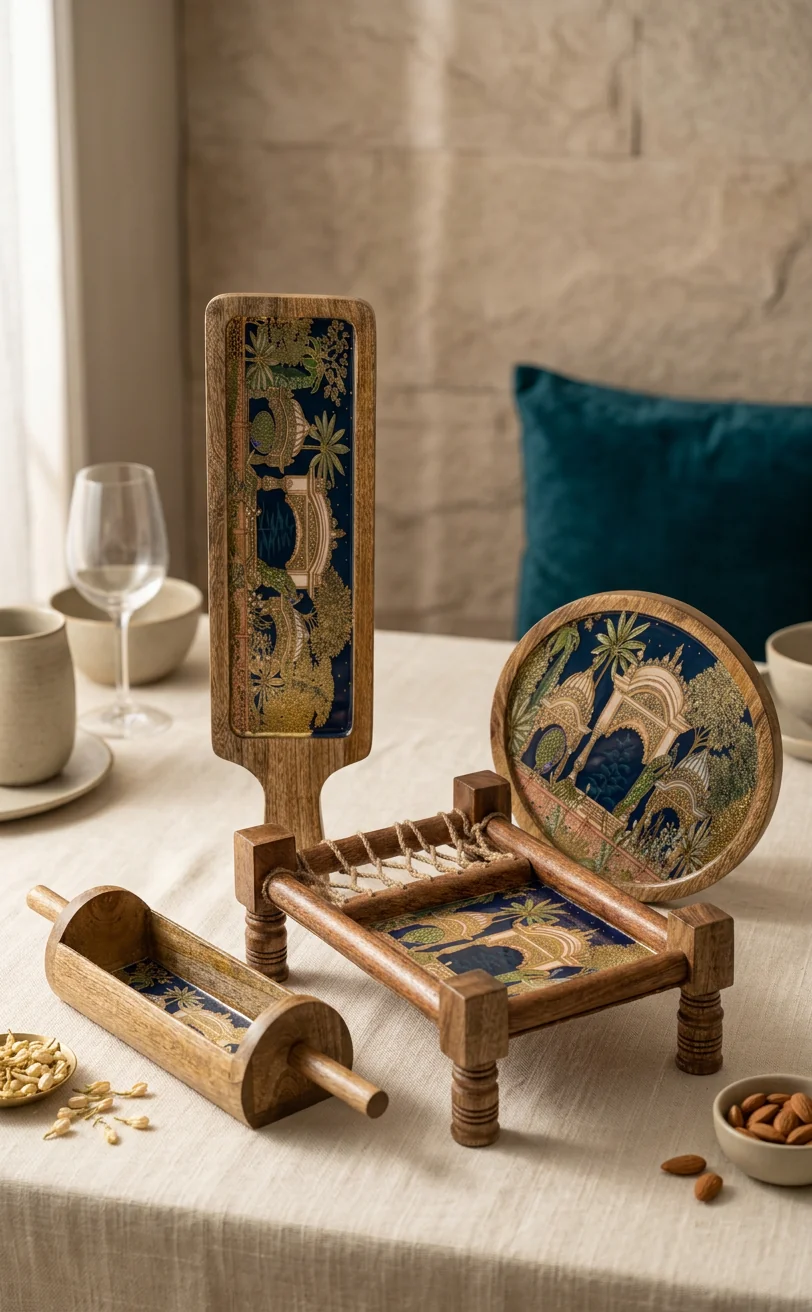
Everyday Trays — Chai, breakfast, moving things from kitchen to table. The workhorses.
Signature Trays — Larger, more decorative trays for entertaining and gifting.
Serving Platters — Anchor pieces for snacks, starters and grazing spreads.
Bowls & Servers — Chutneys, dips, dry fruit, salads.
Dessert Stands — Height for mithai and desserts, which changes how a table looks.
Table Essentials — Coasters, masala boxes and the smaller pieces that hold a table together.
Decorative table pieces sit alongside all of these — things chosen as much for how they look on a console or sideboard as for what they carry. There is no rule that a tray must always be in service.
How to Choose Pieces for Indian Hosting
Indian meals move in stages, and the tableware that works best is the kind that suits a particular stage rather than trying to cover everything.
- Snacks and nibbles at the start — a large platter or a tray with sections, set somewhere people can reach without leaving their seat
- Main-course accompaniments — smaller bowls for raita, pickle and salad, kept off the main serving surface
- Chutneys and dips — a bowl platter keeps them together and stops six little katoris drifting across the table
- Mithai and desserts — a raised stand gives the sweets a place of their own and frees up table space
- Dry fruits — a compartmented piece works well here and can stay out through the festive week
- Tea and snacks — one tray, carried out in a single trip
- After-meal mukhwas — a small compartmented box, brought out once the plates have gone
Two of these are worth reading about in more detail: we have written a full guide to building an Indian grazing table, and a shorter one on using a masala box as a mukhwas box after a meal.
How to Create an Indian Grazing Table
How to Use a Masala Box as a Mukhwas Box
If you are shopping ahead of Diwali or a family function, our guide to styling a festive table covers how to put several of these pieces together on one surface without it feeling crowded.
5 Ways to Style Your Festive Table
Why Shopping in Person Can Help
Scale is the first thing. A tray that looks generous in a photograph can arrive smaller than expected, and the reverse happens just as often. Holding a piece settles the question in a second.
Finish is the second. Hand-applied artwork has slight variation in it — that is the nature of the work — and the depth of a painted surface, the sheen of the wood and the weight in the hand are all things a screen flattens. Colour is the same story: teals and golds in particular photograph differently under different lighting, and seeing them against your own hand is more reliable than a swatch.
The last one is combinations. If you are buying three pieces meant to sit on one table, putting them side by side before you buy tells you more than any amount of browsing. That is the real argument for making the trip.
Visit The Table Story in Crawford Market
Our retail store is on Abdul Rehman Street, a short walk from the Crawford Market crossing. The full catalogue you see on this site — trays, platters, bowls, coasters, dessert stands and table essentials — is what we make, and a wide selection is out on display.
The Table Story, 295 Abdul Rehman Street, Crawford Market, Mumbai 400003. Open Monday to Saturday, 10:00 to 19:00 IST. If you are coming for a specific product or design, message us on WhatsApp at +91 90047 41176 first and we will tell you whether that piece can be seen in store.
Store details, directions and store FAQs — Full address, hours, map and what to expect on the visit.
Tableware in Mumbai — An overview of the range for shoppers across the city.
If a trip is not practical, the same catalogue is available online — choose a design, add it to your cart and place an order request, and our team confirms the details with you.
If You're Buying for a Wedding, Home or Business
The three buy quite differently. Shopping for your own home is usually a slow, piece-by-piece exercise — you buy one tray, use it for a month, and come back for the matching bowls. That is the right way to do it.
Wedding and gifting purchases work on a deadline and usually need consistency: the same design across a set number of pieces, packed and ready by a date. It is worth telling us the quantity and the date early, because design availability varies and hand-finished pieces are not infinitely stocked.
Businesses — hotels, restaurants, retailers and corporate gifting buyers — need volume, repeatability and a conversation about specifications rather than a cart. That is a different process, and we handle it separately.
Wholesale tableware in Mumbai — For bulk, corporate gifting and trade enquiries.
Whichever of the three you are, the advice at the top still holds: know your sizes, decide what the pieces are for, and buy fewer things that work together rather than more things that don't.